
A light source would let African scientists develop cures for diseases of particular relevance to Africa — diseases that may not be receiving sufficient research attention elsewhere. It would give the continent direct access to one of the most powerful tools in modern medicine: the ability to see how the molecules of life are built.
The core argumentSeeing structure to understand function
The central idea comes from structural biology: detailed structural information helps to elucidate protein function and, in particular, the mechanisms of enzymes. Once researchers understand how a biological molecule is shaped and how it works, they can rationally design new drugs that act on it. Synchrotrons are very significant facilities for the imaging of bio-molecules, making this structure-to-medicine pathway possible.

The evidenceWhat the research record shows
The link between synchrotron-derived structures and real medicines is well documented in the scientific literature. The following findings make the case concrete.
210 new drugs from structural information
John Westbrook and Stephen Burley report in Structure (Perspective, 27/2, 2019, pp. 211–217) that the discovery and development of 210 new drugs depended on structural information — such as that identified by X-ray and other techniques.
Structure-based design against HIV
Alexander Wlodawer and Jiri Vondrasek, writing in the Annual Review of Biophysics and Biomolecular Structure (27, 1998, pp. 249–284), describe the contribution of structure-based drug design to the success of developing drugs for HIV.
Fragments in the clinic
A non-confidential listing of drugs, their molecular targets, and the companies developing them based on structural information is maintained in the “Practical Fragments” survey (2018 edition), illustrating how widely structure-based discovery has entered the pharmaceutical pipeline.
Crystallography and the academia–industry interplay
Tom Blundell examines protein crystallography and drug discovery, and the interplay between academia and industry, in IUCrJ (4/4, 2017, pp. 308–321) and in Drug Discovery Today (22/3, 2017, pp. 546–554).
Making R&D more efficient
A thought-provoking analysis of improving the efficiency of pharmaceutical R&D, by Jack Scannell and others, appears in Nature Reviews Drug Discovery (11, 2012, pp. 191–200) — a reminder of why better structural tools matter for the economics of developing medicines.
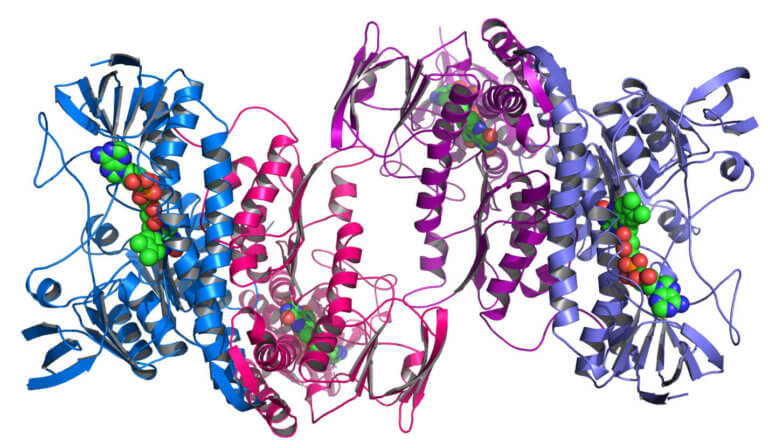
Structural information helps elucidate protein function — and this understanding inspires the design of new drugs.
Africa’s momentumThe capability is already growing
The case is not hypothetical: structural biology and crystallography are already advancing across the continent. From training and facilities to a steadily rising research output, African researchers are building the community a continental light source would serve. See the increasing number of success stories on the AfLS Bioscience in Africa page.


The demand is already here
Africa is doing the science — at scale
The case for a continental light source is not hypothetical. African researchers already produce a large, fast-growing and broad body of work that synchrotron techniques would accelerate. These charts read live from the OpenAlex corpus.
Explore the macro picture →Live figures from the OpenAlex corpus · powered by Apache Superset