
Synchrotron light is not the preserve of any single field. From the proteins inside a cell to the strain inside a turbine blade, from ancient fossils to next-generation energy materials, one bright X-ray source serves dozens of disciplines at once — and African researchers are already working in every one of them.
The case for an African Light Source rests on the science it would enable. The themes below map the research areas where African scientists are active today, the institutions and facilities involved, and the kinds of questions a domestic light source would let the continent answer for itself rather than abroad.
Life & healthMedical and structural science
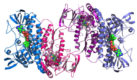
Macromolecular crystallography at synchrotrons underpins modern medicine, revealing the atomic structures of proteins that drive disease and drug design. The image shows a milestone from Argonne’s Midwest Center for Structural Genomics, which deposited its 1000th protein structure — an illustration of the throughput a high-brightness source delivers for the life sciences.
Africa already hosts a network of bio-science institutions equipped for this work, and a continental light source would let African structural biologists collect data at home rather than shipping crystals overseas.
Earth & mineralsGeo-sciences and mineral sciences
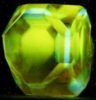
Economic geology and mineral geochemistry are natural strengths for a resource-rich continent. Research groups such as those in earth sciences at Stellenbosch University apply synchrotron methods to understand how ores form and how their chemistry is distributed. The science applied to the earth sciences featured prominently at AfLS 2 in 2019.
EnergyEnergy science
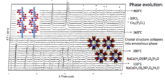
Energy materials — batteries, fuel cells and the storage technologies that will power a low-carbon transition — are studied atom by atom with synchrotron light, which can watch chemistry happen inside a working device. This is a fast-growing African research priority with direct relevance to energy access and independence.
IndustryIndustrial science and catalysis

Synchrotron science already serves African industry. Sasol, described in ESRF News (2010) as a world leader in Fischer-Tropsch catalysis, uses synchrotron techniques to understand the catalysts at the heart of its fuels-from-coal-and-gas processes. As a Sasol scientist working at the ESRF put it, the facility provided a fundamental understanding of the crystalline materials behind the catalysis — the kind of insight a domestic source would put within easier reach.
HeritagePalaeontology and archaeology
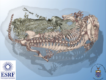
Africa is the cradle of humankind, and synchrotron imaging lets researchers look inside fossils and artefacts without destroying them. Palaeontology in South Africa and across Africa was presented at AfLS 1 in 2016, highlights of African fossil studies featured at AfLS 2 in 2019, and African archaeology projects have been pursued at heritage-science platforms such as IPANEMA. A continental source would keep this irreplaceable record on the continent for study.
EnvironmentEnvironmental science
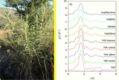
X-ray elemental mapping reveals where metals accumulate in soils and living tissue. One striking application is the study of metal hyperaccumulator plants — species that concentrate metals from the ground — whose ecophysiology can be elucidated with synchrotron mapping techniques, with implications for remediation, agriculture and even biomining.
Materials & nanoMaterials and nano-sciences
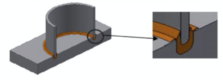
From the strain inside turbine-blade welds to engineered nanostructures, materials and nano-science depend on the penetrating, high-resolution probes that only a synchrotron provides. Measuring residual stress non-destructively in real engineering components is a classic example of work that keeps aircraft and power plants safe.
AcceleratorsAccelerator science
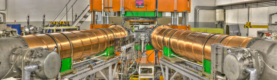
Building and running a light source is itself a frontier science. Instrumentation and accelerator research at iThemba LABS in South Africa demonstrates the home-grown expertise the continent can build on — the people and skills who would design, commission and operate an African Light Source.
Crystallography resources in Africa
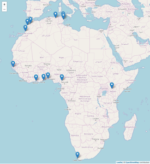
A growing map of crystallography facilities already exists across the continent — the local and regional infrastructure on which a continental light source would build. These resources show that the scientific community and instrumentation base are already taking shape.
What African researchers actually study
Synchrotron light cuts across disciplines — structural biology, materials, chemistry, earth and environmental science. This is the live shape of African research and the light-source-adjacent topics within it, drawn from the OpenAlex corpus.