
MAX IV, in Lund in southern Sweden, is the Swedish national synchrotron and a landmark in accelerator design: the first storage ring in the world built around a multi-bend achromat lattice, the breakthrough that defines today’s fourth-generation light sources.
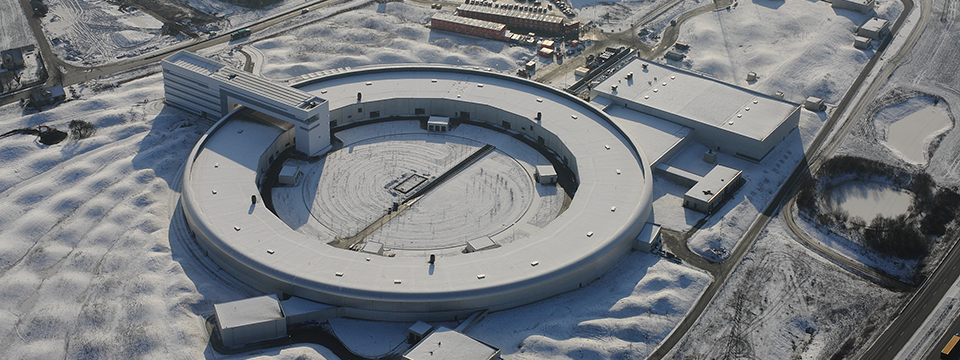
MAX IV Laboratory builds on more than thirty years of Swedish experience operating the earlier MAX I–III facilities. Inaugurated in 2016, it pioneered the multi-bend achromat magnet lattice that packs many small bending magnets into each arc of the ring, squeezing the electron beam into an exceptionally small, well-ordered spot. The result is light of very low emittance and high coherence — the qualities that mark a fourth-generation source — feeding a growing suite of beamlines.
At a glanceFacility profile
- Location
- Lund, Sweden
- Operator
- MAX IV Laboratory, Lund University
- Type
- Fourth-generation synchrotron (multi-bend achromat)
- Energy
- 3 GeV (with a separate 1.5 GeV ring)
- Beam current
- 500 mA
- Beamlines
- 16 and more in operation, growing towards 20+
- Inaugurated
- 2016
- Website
- maxiv.lu.se
The scienceWhat researchers do here
The exceptional coherence and brightness of MAX IV’s beams suit it to nanoscale imaging, sensitive spectroscopy and scattering, and the study of materials under working conditions. Its programme spans batteries and catalysis for clean energy, structural biology, surface and materials science, and environmental research, drawing scientists from Swedish and international institutions as well as industry.
The multi-bend achromat proven at Lund is now the template for the world’s newest synchrotrons.
Access for researchers
MAX IV welcomes proposals through regular calls, with beam time awarded on scientific merit. Several access routes are available; details and deadlines are published on the laboratory’s website.