
ALBA is Spain’s national synchrotron, a third-generation light source on the outskirts of Barcelona that has grown into the country’s largest scientific infrastructure and a hub for researchers from across Europe and beyond.
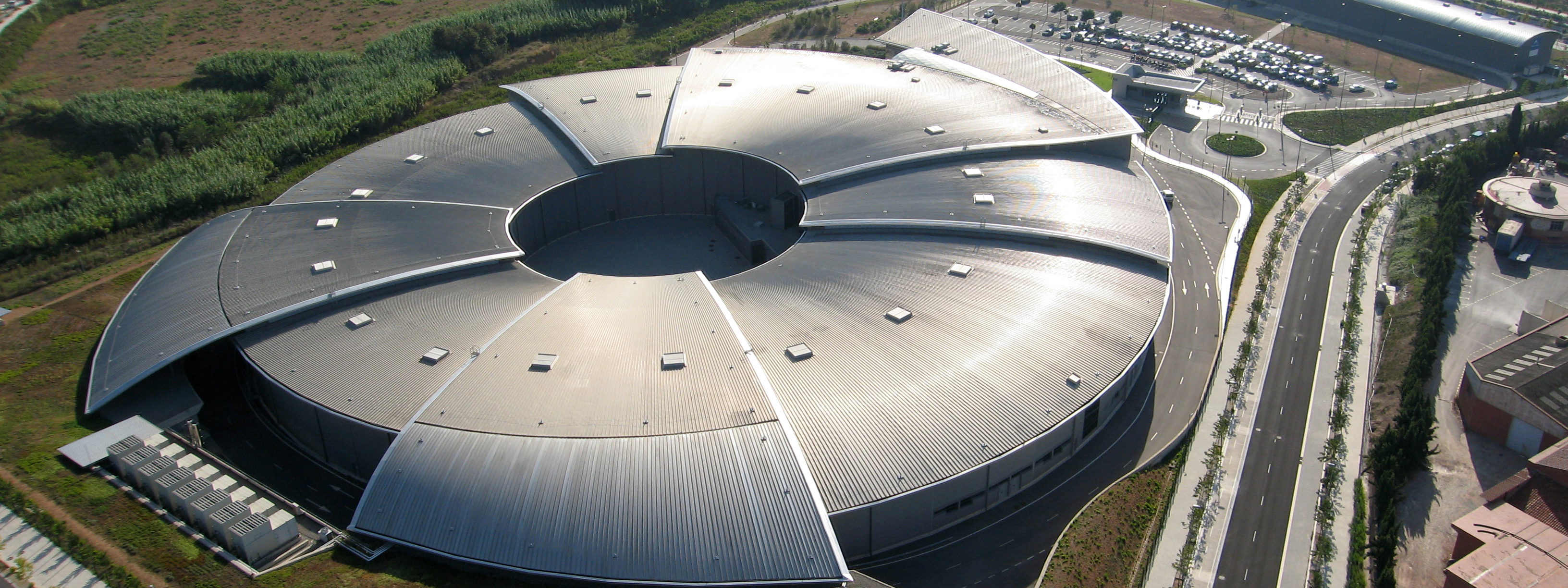
ALBA accelerates electrons to 3 GeV and uses them to produce intense beams of light spanning the spectrum from infrared through to hard X-rays of tens of keV. That light is delivered to a suite of experimental beamlines where scientists apply diffraction, spectroscopy and imaging techniques to study the structure and chemistry of matter. As an open user facility, ALBA receives researchers from universities, public laboratories and industry, who apply for beam time and travel to Barcelona to carry out their experiments.
At a glanceFacility profile
- Location
- Cerdanyola del Vallès, Barcelona, Spain
- Operator
- Consortium for the Construction, Equipping and Exploitation of the Synchrotron Light Laboratory (CELLS)
- Type
- Third-generation synchrotron
- Energy
- 3 GeV
- Beam current
- Up to 250 mA
- Beamlines
- 10 in operation, with several more under construction or commissioning
- Open to users
- May 2012
- Website
- albasynchrotron.es
The scienceWhat researchers do here
ALBA’s beamlines support a broad research programme: macromolecular crystallography for structural biology, X-ray absorption and photoemission spectroscopy for chemistry and materials, microscopy and tomography for imaging, and infrared techniques for everything from cultural-heritage analysis to the life sciences. The same beams that resolve the architecture of a protein can map the chemistry of a battery electrode or the magnetism of a thin film, making the facility a versatile resource for both fundamental and applied science.
A single national facility where a protein structure, a catalyst and a new magnetic material can all be studied with light a billion times brighter than the Sun.
The next generationTowards ALBA II
ALBA is preparing its upgrade to ALBA II, a fourth-generation source built around a modern low-emittance lattice. By concentrating the electron beam into a far smaller, more ordered spot, the upgrade will increase brightness and coherent flux dramatically, sharpening every imaging and spectroscopy technique on site and keeping the facility competitive for decades to come.
Access for researchers
ALBA runs two calls for proposals each year, covering beam time for the first and second halves of the year. The calls typically open in July and January, with deadlines in September and February respectively. Time is awarded on scientific merit and is free for work intended for publication.