
The Canadian Light Source (CLS), on the University of Saskatchewan campus in Saskatoon, is Canada’s national synchrotron — the brightest source of light in the country, serving more than a thousand scientists a year across health, agriculture, the environment and advanced materials.
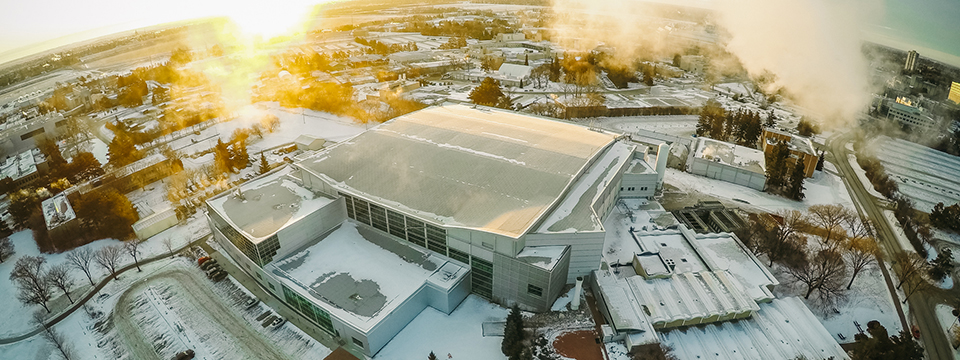
The CLS produces beams ranging from infrared light to hard X-rays — millions of times brighter than the sun — that let scientists probe the structure and chemistry of matter at the scale of atoms and molecules. Funded in 1999 and opened to users in 2004, it is Canada’s only national synchrotron and one of the largest science projects in the country’s history. Researchers from academia, government and industry apply for beam time and travel to Saskatoon to run their experiments.
At a glanceFacility profile
- Location
- Saskatoon, Saskatchewan, Canada
- Operator
- University of Saskatchewan, with Canadian federal and provincial funding partners
- Type
- Third-generation synchrotron
- Energy
- 2.9 GeV
- Beam current
- Up to 220 mA
- Beamlines
- More than 15 in operation
- First light
- 2004
- Website
- lightsource.ca
The scienceWhat researchers do here
The CLS is notably strong in applied and translational research. Its beamlines support work on crop science and soil health, drug discovery and protein structure, cleaner mining and industrial processes, battery and fuel-cell materials, and the tracing of contaminants through the environment. Spectroscopy, imaging and crystallography techniques sit side by side, so a single facility can serve a plant scientist, a medical researcher and a battery engineer in the same week.
Canada’s window on the atomic world: scientists apply for time, then travel to Saskatoon to study matter in light millions of times brighter than the sun.
Access for researchers
General User beam time is awarded through competitive peer review emphasising scientific excellence, with a call for proposals issued twice a year for work intended for publication. Details and deadlines are published on the facility’s website.