
The Advanced Light Source (ALS), at Lawrence Berkeley National Laboratory in California, is one of the world’s brightest sources of soft X-rays — a third-generation synchrotron that serves thousands of researchers a year across physics, chemistry, the life sciences, energy and materials.
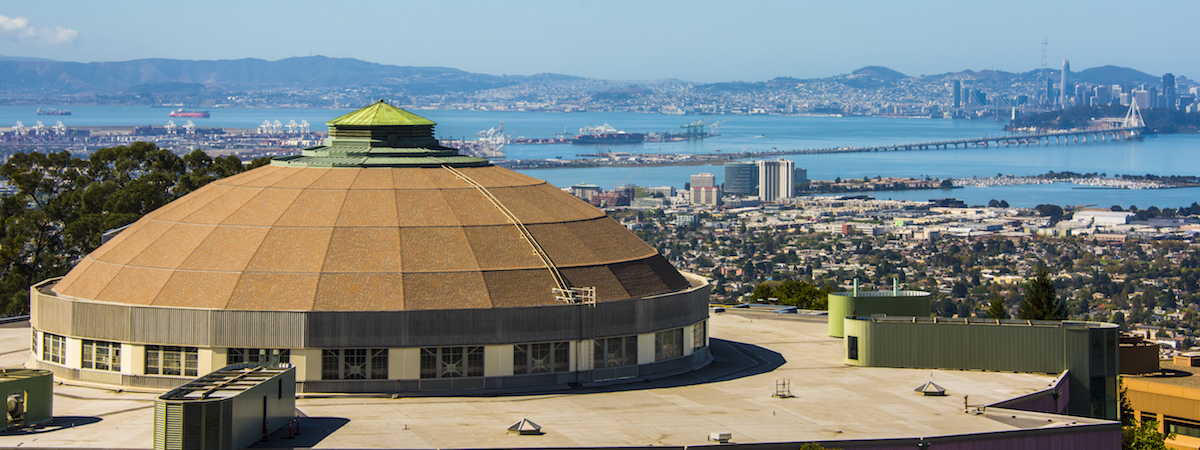
The ALS produces beams of soft X-rays, hard X-rays and infrared light that let scientists probe the structure and chemistry of matter at the scale of atoms and molecules. Operated for the United States Department of Energy’s Office of Science, it is an open user facility: researchers from universities, industry and government apply for beam time and travel to Berkeley to run their experiments, free of charge for work they intend to publish.
At a glanceFacility profile
- Location
- Berkeley, California, USA
- Operator
- Lawrence Berkeley National Laboratory, for the US Department of Energy
- Type
- Third-generation synchrotron, optimised for soft X-rays
- Energy
- 1.9 GeV
- Beam current
- 500 mA
- Beamlines
- More than 40 in operation
- Website
- als.lbl.gov
The scienceWhat researchers do here
Soft X-rays are especially good at revealing the behaviour of electrons — the chemistry of a battery electrode as it charges, the magnetism of a thin film, the way a catalyst grips a molecule, or the architecture of a protein. The ALS combines this spectroscopic and imaging strength with hard X-ray and infrared capabilities, so a single facility can support work ranging from quantum materials and microelectronics to structural biology and environmental science.
A national facility open to the world: scientists apply for time, then travel to Berkeley to run experiments that would be impossible in an ordinary laboratory.
The next generationThe ALS-U upgrade
The ALS is being rebuilt as a fourth-generation, diffraction-limited light source through the ALS-U project. By replacing the storage ring with a modern multi-bend lattice and adding an accumulator ring, the upgrade will concentrate the beam into a far smaller, more coherent spot — increasing the brightness and coherent flux of its soft X-rays by up to a hundredfold. The result will keep the facility at the frontier of soft X-ray science for decades, with new reach for imaging and spectroscopy of complex, real-world materials.
Access for researchers
The most common route to the ALS is the General User Proposal, reviewed twice a year and valid for up to two years of beam time. Calls typically close in early March and early September. Details and application forms are published on the facility’s website.