
The African Light Source (AfLS) is guided by an International Organizing Committee of scientists drawn from across Africa and its diaspora — researchers who have used synchrotron facilities worldwide and who share a conviction that a light source on the African continent is now both a necessity and an urgency.
These committee members bring together decades of experience at major facilities in Europe, North America and beyond. In their own words below, they explain why the AfLS project matters to them — for materials science and structural biology, for the training of the next generation of African scientists, and for what many describe as the “African Science Renaissance.”
“For us, an African synchrotron is more than a necessity but an urgency.”
The CommitteeInternational Organizing Committee Members
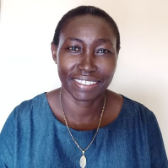
Saphina Biira, Ph.D.
Senior Lecturer, Busitema University · On the AfLS Project: four months
In her own words: I can satisfy two important passions, learning and discovering new knowledge, and more importantly, the role of Science as an Engine for Democracy and Socio-Economic Development, so all can reach their full human potential in a just society. I would like to participate in and contribute to the Transformation of Society, the African Science Renaissance, and the globalisation of the Culture of Learning. In this I would like to see diversity celebrated and valued.

Simon Connell, Ph.D.
Professor, University of Johannesburg, Dept. of Mechanical Engineering Science, Faculty of Engineering and the Built Environment · On the AfLS Project: twenty years
In his own words: I can satisfy two important passions, learning and discovering new knowledge, and more importantly, the role of Science as an Engine for Democracy and Socio-Economic Development, so all can reach their full human potential in a just society. I would like to participate in and contribute to the Transformation of Society, the African Science Renaissance, and the globalisation of the Culture of Learning. In this I would like to see diversity celebrated and valued.
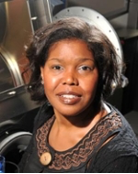
Tabbetha Dobbins, Ph.D.
Associate Professor and Interim VP for Research and Dean of the Graduate School, Rowan University · On the AfLS Project: five years
In her own words: The AfLS project is important to me because, as a light source user at facilities around the U.S. since 2003, I realize the importance of a light source for gaining insights into materials structures in order to understand their properties. Additionally, student training at state-of-the-art facilities is extremely beneficial to them. I understand the urgency of a light source on the continent of Africa.
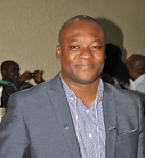
David Dodoo-Arhin, Ph.D.
Associate Professor, University of Ghana · On the AfLS Project: two years
In his own words: The AfLS project is important to me because I have been a light source user at facilities in Europe since 2008, studying nanostructured materials for energy and environmental applications. Additionally, student training at state-of-the-art facilities is extremely beneficial to them; however, no such facility exists on the African continent — hence the urgent need for a light source on the continent of Africa.
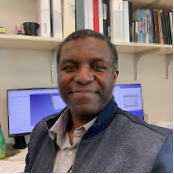
Michel Fodje, Ph.D.
Senior Scientist – Beamline Responsible, Canadian Light Source, Inc. · On the AfLS Project: four months
In his own words: I’ve been involved with synchrotron research for over 20 years and appreciate the importance of such facilities to basic and applied research in a wide variety of subject areas. The lack of a synchrotron facility in Africa is a deficiency that inhibits scientific productivity and technological development on the continent. The AfLS project will address this deficiency, and I am proud to be a part of the effort.

Abram Ledbetter, Ph.D.
Research Associate, Brookhaven National Laboratory · On the AfLS Project: six months
In his own words: The push for synchrotrons within the continent of Africa represents as much a social justice imperative as a scientific one. This effort is critical to bolstering technological infrastructure and scientific programming, which enables greater access to research modalities and collaborative possibilities for scientists within the continent.

Diouma Kobor, Ph.D.
Professor, University Assane Seck of Ziguinchor (Senegal) · On the AfLS Project: five years
In his own words: I participated in the AfLS conference (ESRF Grenoble, November 2015), the first time I heard of the AfLS project and synchrotron facility techniques. Since then, thanks to the LAAAMP project carried out by AfLS, we were awarded two stays at two synchrotrons (ESRF and APS) which allowed us to be trained and to use these excellent facilities to characterize new materials. For us, an African synchrotron is more than a necessity but an urgency.

Sekazi Mtingwa, Ph.D.
Principal Partner, TriSEED Consultants, LLC · On the AfLS Project: twenty years
In his own words: The AfLS will be a necessary infrastructure to place Africa among the leading nations in the world that are pursuing science and technology for their socioeconomic development. I proposed a Pan-African synchrotron light source to EBASI in 2000, and after fruitful discussions decided that first building up regional laser infrastructures would be the best way to lay the groundwork for an AfLS. Therefore, I partnered with others to found the African Laser Centre.
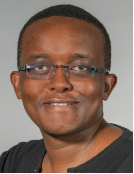
Prosper Ngabonziza, Ph.D.
Scientist, Max Planck Institute for Solid State Research, Stuttgart, Germany · On the AfLS Project: three years
In his own words: The AfLS project is important to me because, as an African in the diaspora who has been using synchrotron light sources around Europe since 2010, I believe in the importance of synchrotron light sources for proper characterization of quantum materials with potential applications in diverse current and future electronic devices. I also believe in the vision of building an African Light Source on the African continent that will contribute significantly to the African science renaissance, the return of the African science diaspora, and the enhancement of university education on the continent.
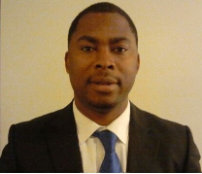
Peter Ngene, Ph.D.
Assistant Professor, Debye Institute for Nanomaterials Science, Utrecht University · On the AfLS Project: six months
In his own words: As a regular user of synchrotron facilities, I can say that synchrotrons are extremely important to the discovery and understanding of novel materials required for sustainable economic and social development. Having a light source on the African continent will be a major boost to the scientific activities and training of the future generation of African scientists.

Lawrence Norris, Ph.D.
On the AfLS Project: eight years
In his own words: The future looks bright for Africa in structural biology. The African Light Source has the potential to address many key issues in structural biology and the rules of life. For this reason, Africa as a continent must become a key player in the technologies of light sources. Each African national government should incentivize its universities to build infrastructure in all the fields that support biophysics, including chemistry and biochemistry labs, computing, as well as facilities for spectroscopy, light scattering, imaging, crystallography and microscopy — i.e., advanced light source facilities. The African Union as a body should spark policies that encourage industries to invest in Africa’s bioeconomy.
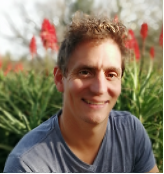
Bjorn von der Heyden, Ph.D.
Stellenbosch University, South Africa · On the AfLS Project: nine years
In his own words: I see the AfLS initiative as being crucial towards enhancing the competitiveness of African scientists within the global research community. I think that it will be a great leap forward for the continent’s research prowess, and it will certainly help to accelerate the so-called “African Science Renaissance”.
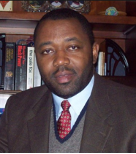
Nkem Khumbah, Ph.D.
Professor, University of Michigan · On the AfLS Project: five years
Dr. Nkem Khumbah is a mathematician at the University of Michigan and a member of the STEM-Africa Initiative there. Previously he was an Assistant Professor of Mathematics at North Georgia College and State University. His research has focused on the development and application of mathematical structures that facilitate the compression of massive data sets with minimal distortion to the statistical structure of the data. He is an avid ambassador of international scientific capacity and human development, consulting for and closely working with multiple regional and international organizations, including the African Union, select African governments, the World Bank African Centers of Excellence Project, UNESCO, the Washington-based Constituency for Africa (CFA), the Association of African Universities, and the African Network of Science and Technology Institutes (ANSTI), among others. He served in 2015 as Founding Executive Curator of the Next Einstein Forum (NEF): Africa’s Global Forum for Science, Policy and Society. He served as the Science and Technology chair of the first-ever African Continental Summit on Higher Education in 2015, and co-authored recommendations that were adopted by the African Union at its establishment of a Committee of 10 African Heads of State as continental Champions of Science and Education.