At Science Forum South Africa 2018, the African Light Source and the South African Synchrotron Users community jointly hosted “A Brighter Light for African Science” — making the case for dramatically improved research, and the associated socio-economic benefits, that a modern light source would unlock across the continent.
- Event
- Science Forum South Africa (SFSA) 2018
- Dates
- 12–14 December 2018
- Session
- A Brighter Light for African Science
- Convened by
- The AfLS together with the South African Synchrotron Users
Science Forum South Africa attracts thousands of delegates from across Africa each year, including very senior government policy makers. That audience made it the ideal venue for the AfLS to set out how a continental light source could transform research and contribute to socio-economic development by harnessing the massively expanded research potential of modern light sources.
THE OPPORTUNITYOne facility, many disciplines
The session framed light sources as engines of opportunity across a remarkably broad range of fields. The development opportunities span multiple disciplines, including:
MedicalMedical Sciences
HeritageHeritage Sciences
GeoGeosciences
EnviroEnvironmental Sciences
EnergyEnergy Sciences
NanoNano Sciences
MaterialsMaterials Sciences
MineralsMineral Sciences
Beyond these, the opportunity extends to Accelerator and Detector Sciences, competitive industry, capacity building, and the science infrastructures themselves.
CONCEPT NOTEWhy light sources are transformational
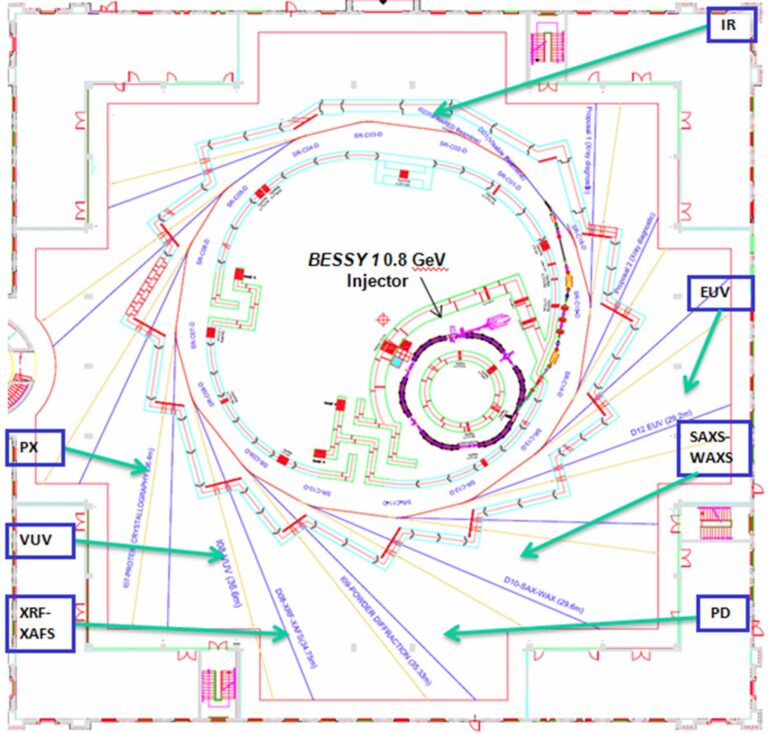
Light sources (LSs), such as those provided by synchrotrons and Free Electron Lasers, are currently the most transformative state-of-the-art research instruments for a broad spectrum of disciplines — physics, chemistry, bioscience, materials science, nanoscience, geoscience, heritage science, environmental science, medical science, all fields of engineering, and industrial manufacturing. They embrace essentially all spectroscopic and many imaging techniques, using radiation from the infrared (IR), through the visible, ultra-violet (UV) and X-ray, to the soft gamma-ray part of the electromagnetic spectrum.
LSs are orders of magnitude brighter than traditional lasers — which themselves have transformed science and technology for decades. The impact, however, reaches far beyond science. A light source is an enormous engine for capacity development, competitive industry, and sustainable contributions to health, the environment, mineral beneficiation, clean energy, the culture of learning, and many other important spin-off benefits.
An enormous engine for capacity development, competitive industry, and sustainable contributions to health, the environment, mineral beneficiation, clean energy and the culture of learning.
SESSION AGENDAWhat the session covered
The session set out to address three central questions:
- How and why synchrotrons are transformational science facilities.
- Examples of particularly African problems addressed by synchrotron scientists, and in particular by African synchrotron scientists.
- Explorations of different models of multi-national cooperation for major scientific facility investment.