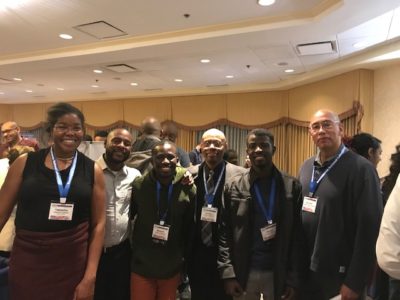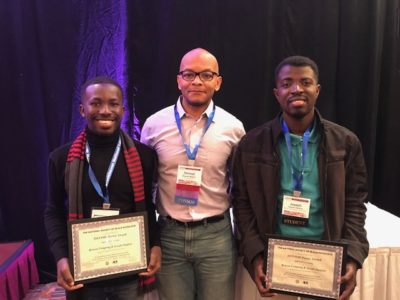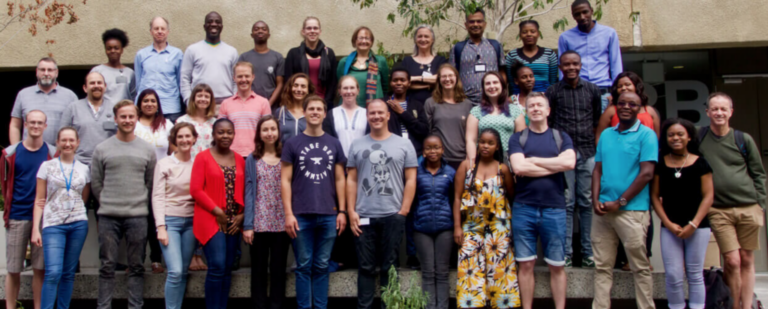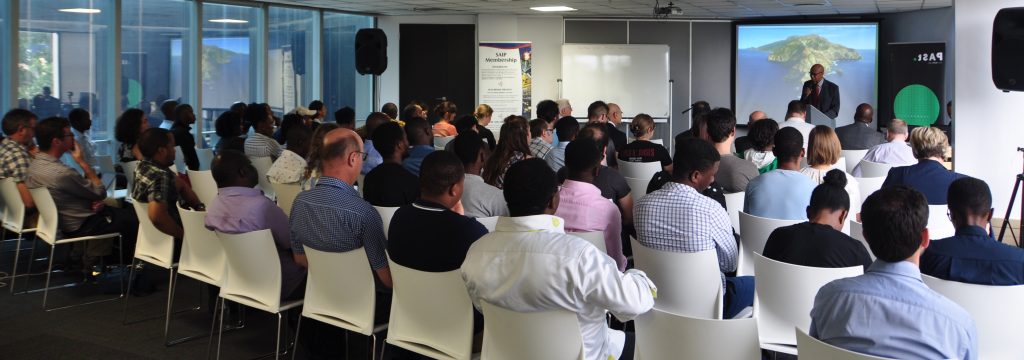
The SA-ESRF-2019 Conference brought South Africa’s synchrotron user community together with the leadership of the European Synchrotron Radiation Facility (ESRF) to chart the next decade of collaboration around the newly upgraded, Extremely Brilliant Source.
- Dates
- 11–13 November 2019
- Venue
- Johannesburg, South Africa
- Host community
- South African ESRF and Light Source User Base

CONTEXTA decade of building the South African user base
The meeting built on more than a decade of deep commitment to developing the ESRF user base in South Africa. The breadth of that user base already reflects the global nature of science and the standing of the ESRF as a leading international facility. The SA–ESRF relationship sits within the wider context of the full Light Source User Base of South Africa, which draws on many light sources around the world.
The ESRF was selected by the South African community for Scientific Associateship because, as an international facility, it offers a number of premier and unique features and is especially heavily used by South Africa — to a level comparable with other smaller European nations. It also plays the role of supplying central innovation for other light sources and extended capacity for specialist training: its staff complement is roughly twice that of other light sources. All light sources accessed by South Africans remain important to the user base, whether for a niche competence, special collaborative networks, or efficiencies of access.
South Africa uses the ESRF to a level comparable with that of smaller European nations.
THE UPGRADEThe ESRF as an Extremely Brilliant Source
At the heart of the meeting, delegates explored the enhanced capacity of the ESRF following its upgrade to an Extremely Brilliant Source (EBS). The ESRF-EBS represents an impressive leap in the performance of both the source and the detectors: a 100-fold improvement in emittance, and detector performance that is 10 to 1,000 times better depending on the context. Alongside the dramatic enhancement of the usual spectroscopies and imaging techniques, entirely novel techniques and opportunities emerge.
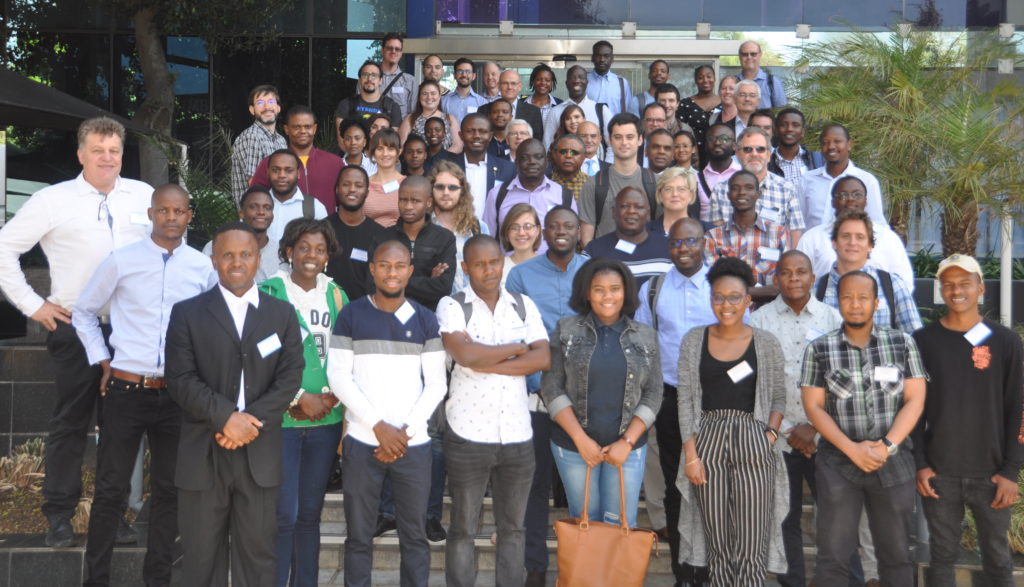
Because these analytical and imaging modalities are so dramatically improved — and in many cases entirely new — there is not yet an established user experience to draw on. Exploiting the new capacity therefore requires close partnerships with the ESRF’s beamline scientists.
The conference extended the possibility for all South African users, and for potential new users, to grow existing connections with the ESRF or to launch new ones — with the aim of developing proposals ready for the March 2020 round.
ESRF LEADERSHIPThe facility’s top team in attendance
The ESRF was represented by its top leadership, reflecting the importance of the South African relationship. The delegation also included four leading beamline scientists, together representing all the major areas of research relevant to South Africa.
Dr Francesco Sette
Director General, ESRF
Harald Reichert
Research Director, Physical Sciences, ESRF
Jean Susini
Research Director, Life Sciences, ESRF
Four leading beamline scientists
The ESRF delegation was completed by four senior beamline scientists, chosen to represent all of the major research areas in which South African users are active, from spectroscopy and imaging to the structural sciences.
OUTCOMESTowards new proposals in 2020
By connecting users directly with the scientists who run the upgraded beamlines, the meeting laid the groundwork for a new generation of experiments at the ESRF-EBS and reinforced South Africa’s standing within the global light source community. The clear next step was the development of strong, partnership-driven proposals ready for the March 2020 submission round.