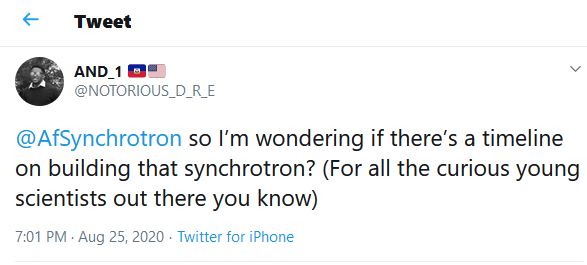
A good question reached us over social media: “Is there a timeline on building that synchrotron — for all the curious young scientists out there?” The short answer is yes. The African Light Source Foundation has a defined mandate and roadmap, and there are many ways for young scientists to join the journey.

The African Light Source Foundation (AfLS) is a legally constituted African NGO with a defined mandate and roadmap. That roadmap calls for a 10–15 year timeline toward the construction of an actual facility — and there are many opportunities for young scientists to travel that road with us.
BackgroundTwo decades in the making
The precursor conversation among many AfLS members goes back two decades, particularly rooted in the genesis of the African Laser Centre in 2002. Since then there have been many schools, workshops and conferences covering numerous aspects of light-source-based science, and African research infrastructures in general.
In 2015 the AfLS was formally created. We have been working with a wide range of stakeholders to build the capacity and local infrastructure that Africa needs to support an African light source. We are developing partnerships with the African Union and various African governments — especially those of Ghana, Rwanda, Egypt and South Africa — as well as with other African NGOs, programmes and institutions, light source facilities worldwide, and international scientific bodies.
The challengeWhy a timeline is only the beginning
Constructing a major facility is more complicated than simply conjecturing a timeline. Advanced light sources are exceedingly complex facilities, and building one takes decades of commitment — from the highest levels of government down to individual project scientists.
Planning, designing, building and commissioning a large infrastructure project must follow a well-managed process that starts with the production of a Conceptual Design Report (CDR). Conceptual designs provide a high-level overview of how the interacting sub-systems of a large project fit together, with the central aim of maximising the probability of a feasible final product. A CDR normally addresses all aspects — political, socio-economic, technical, scientific, industrial, financial, training and localisation among them — but not yet site selection, only site criteria.
The main idea behind the conceptual design is to maximise the probability of a feasible final product.
One purpose of a CDR is to secure political buy-in on a well-defined project. Another is to arrive at a plan that scientists, engineers and other end-users can use as a guide for detailed technical designs. Deciding exactly what to build is not trivial: advanced light source facilities support several different science and technology disciplines, and can deliver enormous capability through many different techniques.
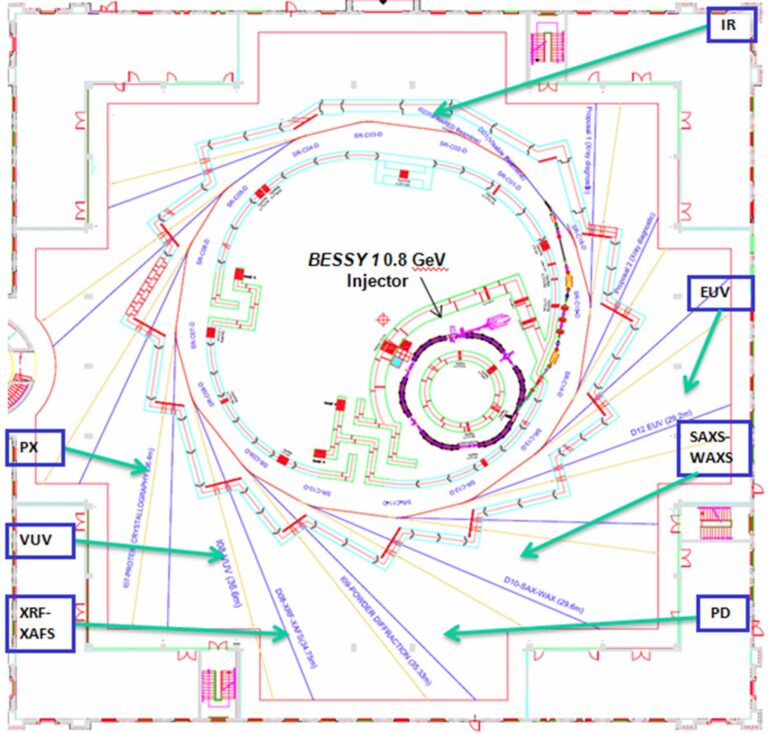
So a key objective of our CDR is to lay down how big the accelerator will be, how many beamlines should be built, which techniques — among crystallography, imaging, microscopy, scattering and spectroscopy methods — will be prioritised, and what the reasonable bounds on affordability are.
The processHow we will produce the CDR
The AfLS begins its CDR process in earnest at its November 2020 virtual conference. We plan to produce the CDR in a two-step process that turns an open, crowd-sourced exchange of ideas into a single authoritative document.
Step 1 — Crowd-source the concepts
We will crowd-source concepts using our robust network of colleagues and our own CDR Journal — an online journal inviting whitepaper submissions on the topics in the CDR outline. Submissions will be peer-reviewed and may eventually be printed as a bound monograph.
Step 2 — Synthesise the report
Writing teams will reduce all the available sources of information — from the CDR Journal and elsewhere — into a single report: the CDR itself. Together these steps will both produce the latest concepts for policy and design and solidify a global network of friends with a profound interest in an African light source.
Our CDR will scope out not only appropriate applications for Africa, but also new methodologies and entirely new techniques to implement. We anticipate that African MS, PhD, MD, DDS/DMD, MBA and LLB/LLM students will have the opportunity to develop whole thesis projects — in biophysics, chemistry, physics, engineering, palaeontology, food, medical, dental and materials sciences, as well as economics, law, business and policy studies — that could advance any one of the concepts important to an African light source.
We have arrived at an outline for our CDR (set out below), and we invite students and colleagues across Africa and beyond to make submissions on topics in their areas of expertise.
The blueprintDetailed outline of the CDR
The outline spans four volumes, moving from the political and economic case, through the machine that produces the light, to the experimental capabilities it enables and finally the physical plant that houses it all.
Volume I — Political, Economic Development, and Management Concepts
- The Science Case
- The Economic Benefits Analysis
- The “upstream model” of economic impact
- The “downstream model” of economic impact
- The Education Infrastructure and Human Capacity Development
- Financial Considerations and Models
- Light sources across the world — present situation
- Suggested Roadmap Trajectories and Procedures
- Roadmap — sections to include political, economic, educational, project planning and management, and local and regional infrastructure (e.g. cryo-EM, Compact Light Source)
Volume II — Machine Component Design Concepts
- Electron Injector, LINAC
- Booster
- Storage Ring
- Beamline / X-ray Optics
- Cryo-Electron Microscopes (cryoEM)
- X-ray Free Electron Lasers (XFEL)
Volume III — Experimental Capabilities and Beamline Concepts
- Gamma-ray Spectroscopy and Crystallography
- Macromolecular X-ray (MX) Crystallography
- Materials and Chemical Crystallography
- Micro-crystallography
- Small / Wide-angle Scattering (SAXS/WAXS)
- Powder X-ray Diffraction (PXD)
- X-ray Spectroscopy (XAS/XES, EXAFS, XANES, XFS, Auger)
- UV-vis, Electronic and Optical Spectroscopy
- Infra-red Spectroscopy
- Pump-probe, Multi-colour, and Time-resolved techniques
- Tomography
- Surface Microscopy and Imaging
- Beamlines for Medical Use
- Experimental Hutch Mechanical Systems
- Detectors and Electronics
- Data Handling, Algorithms, Software and Analysis
- Theory Centres
- Other Technical Capabilities for other Instruments, Fields of Study and Innovations
Volume IV — Building Design and Construction
- Overall design concepts for the physical plant
- Grounds, utilities and public works
- Buildings, workspaces, and ergonomics
- Support laboratories, feeder infrastructure
- Computational infrastructure
- Space for the Mega-science and Innovation Park
- Site Selection Criteria and Procedures
Measuring the momentum
The growth curve behind the question
Open the nations & growth dashboard →Live figures from the OpenAlex corpus · powered by Apache Superset