
The Stanford Synchrotron Radiation Lightsource (SSRL), at the SLAC National Accelerator Laboratory in California, is one of the oldest and most productive synchrotrons in the world — a high-brightness storage ring that has served the research community continuously since the 1970s.
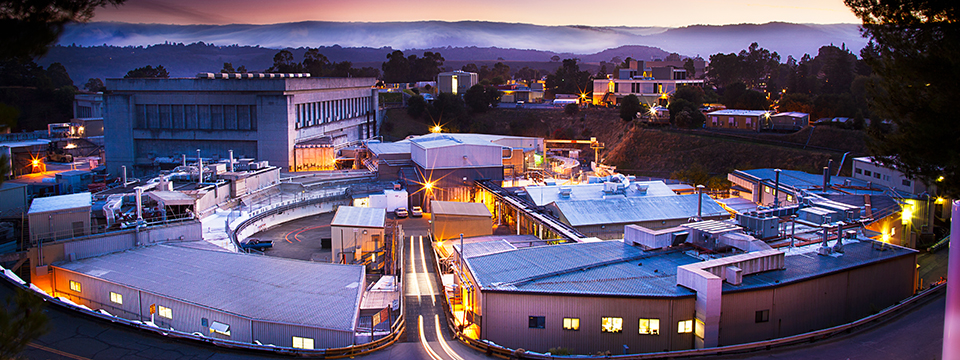
SSRL runs the SPEAR3 storage ring, a 3 GeV, high-brightness third-generation source that operates at 500 mA in top-off mode with low emittance and high reliability. Operated for the United States Department of Energy’s Office of Science by Stanford University, it is an open user facility: scientists from universities, industry and government apply for beam time and travel to SLAC to run experiments, free of charge for work they intend to publish. SSRL is also a major training ground, with most of its users early-career scientists.
At a glanceFacility profile
- Location
- Menlo Park, California, USA
- Operator
- Stanford University at SLAC, for the US Department of Energy
- Type
- Third-generation synchrotron (SPEAR3 storage ring)
- Energy
- 3 GeV
- Beam current
- 500 mA, top-off mode
- Beamlines
- 24 in operation
- First light
- 1974
- Website
- www-ssrl.slac.stanford.edu
The scienceWhat researchers do here
SSRL’s extremely bright X-rays let scientists study the world at the atomic and molecular level, with longstanding strengths in X-ray spectroscopy and protein crystallography. Researchers use the facility to advance energy production and storage, environmental remediation, catalysis, nanotechnology, new materials, structural biology and medicine. Half a century of operation has yielded tens of thousands of publications, a substantial share of them in the highest-impact journals.
A pioneer of synchrotron science, open to the world: scientists apply for time, then travel to SLAC to run experiments impossible in an ordinary laboratory.
Access for researchers
Standard proposals can be submitted three times a year, with separate deadlines for X-ray/VUV beamlines and for macromolecular crystallography. Details and current deadlines are published on the facility’s website.