Synchrotron radiation has revolutionized basic and applied research across dozens of scientific and technological disciplines. Africa is presently the only habitable continent without a synchrotron light source — and this white paper sets out why building one is no longer a luxury but a necessity for the continent’s scientific, economic and political future.
About this paper
A briefing by Sekazi K. Mtingwa (Triangle Science, Education & Economic Development, LLC; Massachusetts Institute of Technology; African Laser Centre) and Herman Winick (SLAC National Accelerator Laboratory; Stanford University), dated July 10, 2014.
IntroductionA global tool that Africa still lacks
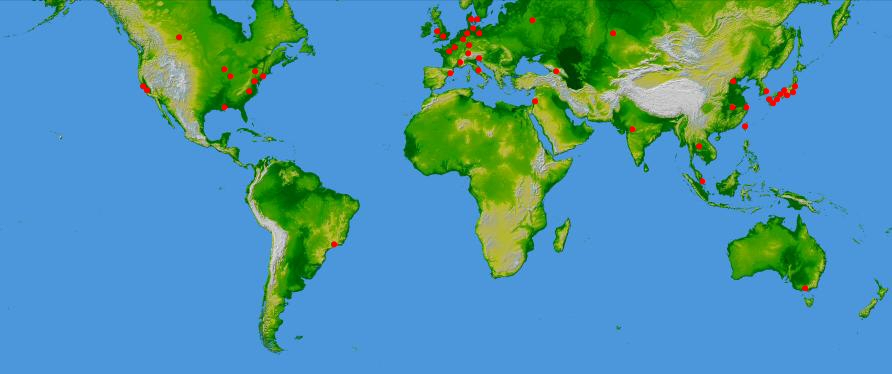
Synchrotron radiation has revolutionized basic and applied research in many scientific and technological disciplines, leading to a proliferation of facilities around the world. There are links to 47 synchrotron radiation research facilities based on electron storage rings in 23 countries — in operation, construction or planning. Several facilities operate more than one ring, so more than 47 rings are in operation. The list of facilities in construction is not complete; for example, a 1.5 GeV facility nearing completion in Poland is not included.

47facilities in 23 countries
30,000+scientists & engineers using them
0light sources in Africa
More than 30,000 scientists and engineers — including thousands of students — conduct basic and applied research at synchrotron radiation facilities in many Asian countries, Australia, Brazil, Canada, many European countries, and the United States. These resources carry news and science highlights from each facility, photos and videos, education and outreach materials, a calendar of conferences and events, details about facility contacts and capabilities, and information on funding opportunities.
Africa is presently the only habitable continent without a synchrotron light source. Dozens of scientists from African countries now perform experiments at facilities in Europe and elsewhere; their numbers are limited mostly by distance and travel cost. A light source in Africa would enable thousands of African scientists and engineers to gain access to this superb scientific and technological tool. Indeed, in order to be competitive socially, politically and economically in the years to come, access to a nearby synchrotron light source will be an absolute necessity.
Africa is presently the only habitable continent without a synchrotron light source.
Models to followNational and international light sources
Most present light sources are national facilities. Almost all are in over-demand, leading to construction of additional facilities to serve an increasing worldwide user community. Two light source facilities, however, are international — and together they illustrate, in size and cost, the broad range of examples that might be followed for an African light source.
- ESRF (Grenoble, France)
- The European Synchrotron Radiation Facility: 6 GeV, 850 m circumference. A collaboration of 18 European governments plus South Africa and Israel, in operation since 1992.
- SESAME (Middle East)
- 2.5 GeV, 130 m circumference, then in construction as a collaboration of 9 Middle East governments: Bahrain, Cyprus, Egypt, Iran, Israel, Jordan, Pakistan, the Palestinian Authority and Turkey. Scheduled to start research in 2016, closely modelled on CERN, and developed under the auspices of UNESCO.
UNESCO became the umbrella organization for SESAME at its Executive Board 164th session in May 2002, as it had done for CERN in the 1950s. UNESCO’s Executive Board described SESAME as “a quintessential UNESCO project combining capacity building with vital peace-building through science” and “a model project for other regions.” It is likely that UNESCO, if asked, would play a similar facilitating role for an African light source.
SESAME was, at the time of writing, well underway towards the start of research in 2016 as a fully independent intergovernmental organization. Other regions — such as Africa and Central Asia — are welcome to join SESAME as Members or Observers, as a first step to developing similar projects in their own regions. Students and scientists from these regions are encouraged to attend SESAME Users’ meetings, schools and workshops, where they can learn about synchrotron radiation sources, beamlines and science. They are also welcome to join SESAME scientists in designing and commissioning accelerators and beamlines, gaining experience while helping SESAME in the process.
The physicsSynchrotron radiation basics
Synchrotron radiation is the light — electromagnetic waves — emitted by electrons as they are caused to change direction by magnets while circulating in storage rings at nearly the speed of light. It is also called “dream light” because it can be used in leading-edge scientific research and technologies. This light is produced over a broad spectral range, from infrared to hard x-rays of tens of kilovolts, enabling the use of monochromators to select a narrow band of wavelengths of interest to a particular study.
In practical situations — for example, the number of x-rays per second, within a narrow wavelength/energy band, that impinge on a sub-millimeter protein crystal — this radiation is a million to a billion times more intense than that produced by more conventional sources such as x-ray tubes.
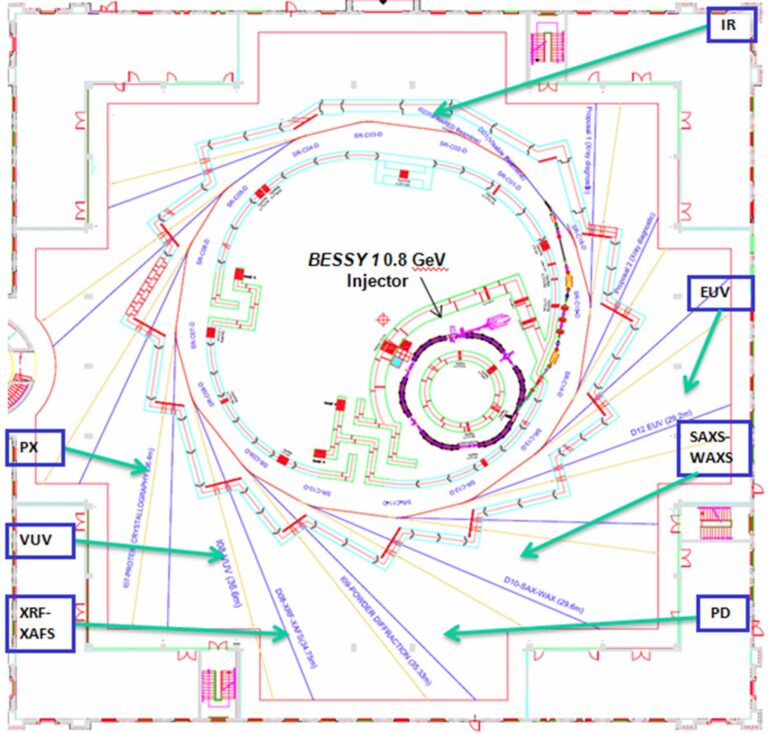
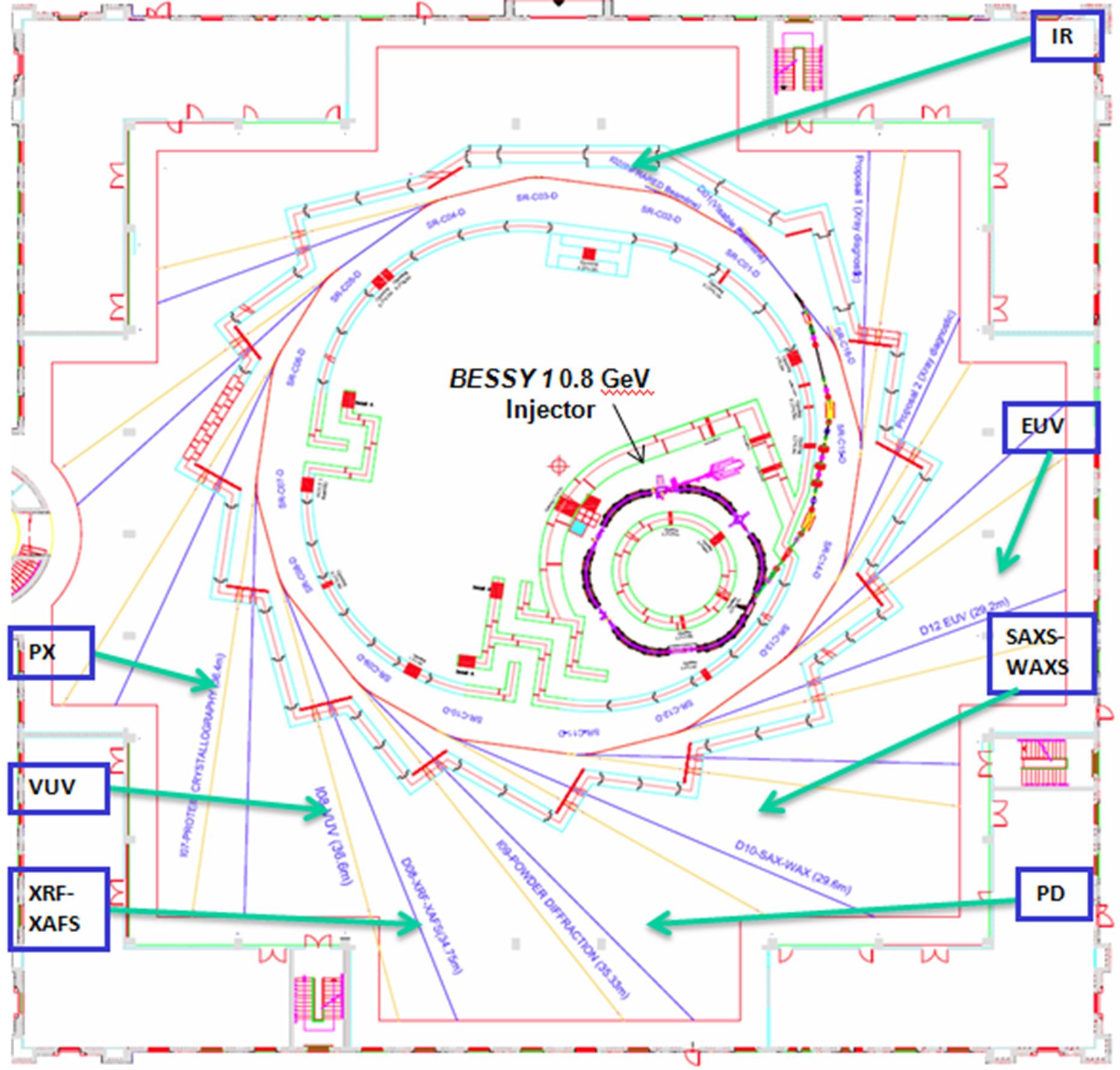
These storage rings range from tens of meters to 2 kilometers in circumference. They circulate and store electrons with energies from several hundred MeV to 8 GeV for several hours. The emitted radiation — produced by the bending magnets of these rings, or by periodic magnet arrays called wigglers and undulators inserted between the bending magnets — enters tangential beamlines that conduct the light to experimental stations. Several experimental stations receive this light at the same time, enabling many experiments — up to about 70 in the largest facilities — to be performed simultaneously. In addition to the storage ring and beamlines, another major piece of equipment is required: an injection system (a linear or circular electron accelerator) that provides electrons to fill the storage ring.
Why it mattersThe benefits of a nearby light source
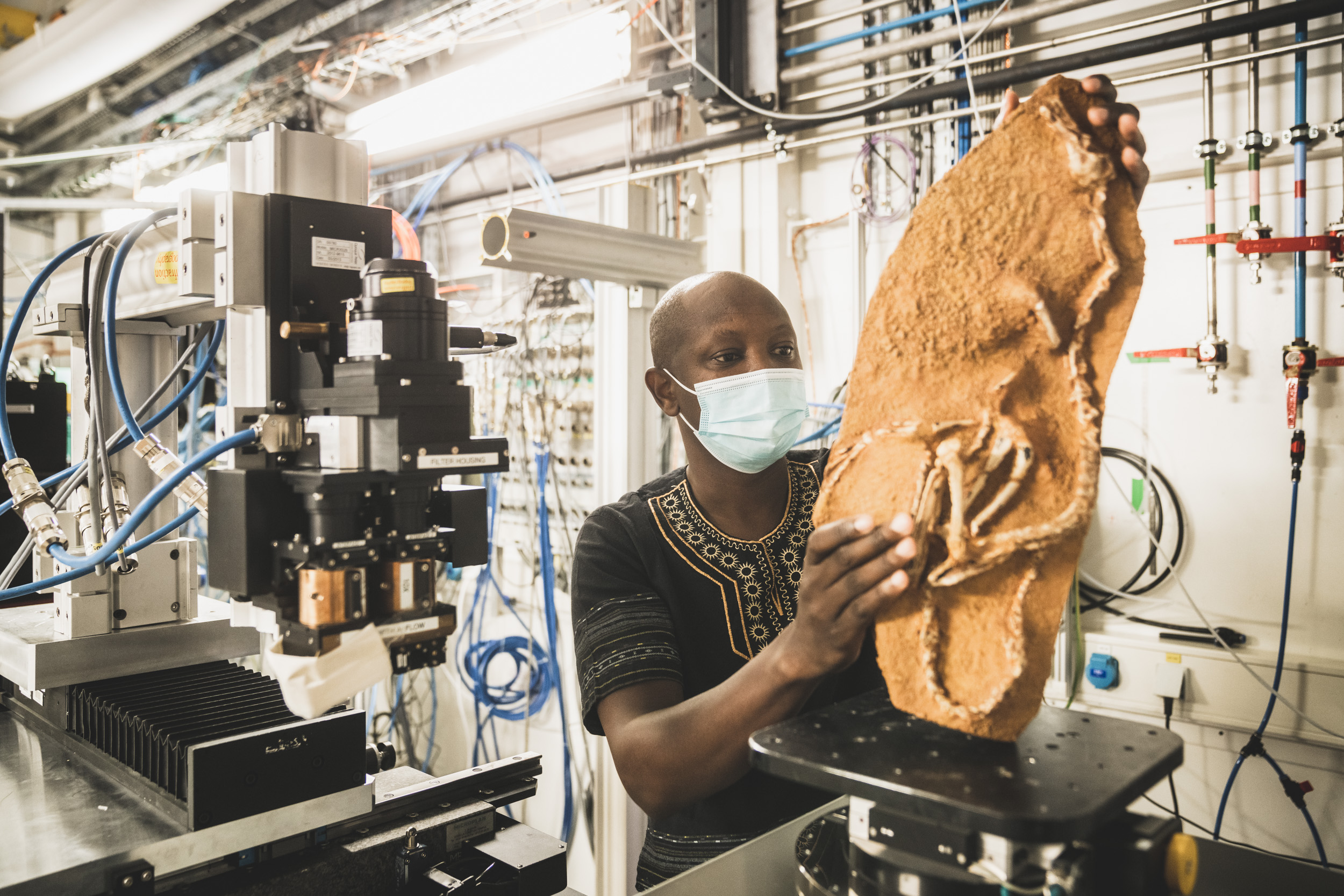
As is evident from experience around the world — in developing countries as well as technologically advanced ones — access to a nearby synchrotron light source brings many benefits:
- Conducting world-class basic and applied research
- Training graduate students without sending them abroad
- Attracting scientists conducting research abroad to return home
- Addressing regional biomedical and environmental issues and concerns
- Promoting the development of high-tech industry
The intermediate-energy caseHigh performance at lower cost
Most recently completed facilities, and those in construction, are largely based on so-called “intermediate energy” electron storage rings, with energies of 2.5–3.5 GeV and circumferences of 100 to several hundred meters. By exploiting recent developments in storage-ring technology and in wiggler and undulator insertion devices, these facilities provide — at significantly lower cost — performance closely approaching, and in some cases exceeding, that of the larger, higher-energy facilities.
Lessons from Brazil, Korea and Taiwan
Particularly relevant to a light source in Africa is the experience of Brazil, Korea and Taiwan. After first sending scientists to use facilities abroad, funding for their light-source programs began in the mid-1980s — when these countries were less technologically developed than they are now — and the facilities began operations in the mid-1990s. Since then each has trained hundreds of graduate students locally and attracted many mid-career scientists to return home. Having seen these benefits, all three governments later approved funding at about the $300M level to build new, more advanced intermediate-energy (3 GeV) light sources to serve their large and growing user communities. The summary of the Taiwan Light Source experience, provided by its Director, is included in the appendix to the original report.
A path forwardAggressive planning over a decade
These benefits can be realized in about a decade with aggressive planning for an African Light Source. That planning should include increasing the funds available to expand the number of African scientists conducting experiments abroad, and building expertise by training personnel in the latest relevant technology — including the design, construction and commissioning of storage rings, beamlines and experimental equipment.
This approach has been used successfully in several countries, including Australia, Brazil and Canada, which built beamlines at facilities abroad and supported their scientists to use these beamlines as a step leading to funding for their own national light sources. We therefore urge that training programs be initiated in Africa and that partnerships be developed with light sources abroad — a particularly relevant example being the SESAME project. For more detail on the properties, sources and applications of synchrotron radiation, the lectures of the African School on Fundamental Physics — 2012, held in Ghana, are a valuable resource.
A working modelThe African Laser Centre
Several models already exist of African countries collaborating on scientific and technological projects. One such model is the African Laser Centre (ALC). It began as a joint effort of South Africa’s National Laser Centre (NLC) and the Edward Bouchet–Abdus Salam Institute (EBASI), sponsored by the International Centre for Theoretical Physics (ICTP).
From the South African side, the NLC inherited a large inventory of state-of-the-art laser equipment from a defunct uranium-enrichment collaboration with France. To make full use of it, the NLC started a loan program granting use of the equipment to South African researchers. The program was so successful that, around the year 2000, the NLC decided to expand it to the whole African continent. At the same time, the EBASI Council resolved to seek ways to enhance laser research and training in Africa. Once the two efforts became known to one another, they joined forces to create what became the African Laser Centre. The ALC celebrated its 10th anniversary during 2013, having been officially launched on November 6, 2003, in Johannesburg, South Africa. The launching ceremony occurred during the Ministerial Segment of the New Partnership for Africa’s Development (NEPAD) Conference on Science and Technology for Development, and NEPAD declared the ALC to be one of its Centers of Excellence.
The ALC, a virtual center, was established as a nonprofit organization based in Pretoria. The organizers designed it to consist of nodes — laser laboratories in various stages of development. The most developed nodes of the network are designated as User Facilities:
Centre de Développement des Technologies Avancées (CDTA)
Algiers, Algeria
Laser spectroscopy, surface studies, laser welding.
CSIR National Laser Centre — ALC Headquarters
Pretoria, South Africa
Manufacturing, machining, materials processing.
National Institute of Laser Enhanced Sciences (NILES)
Cairo University, Egypt
Medical and biological applications of lasers; femtosecond laser system.
Tunis el Manar University
Tunis, Tunisia
Plant and environmental science, molecular spectroscopy.
Laser and Fibre Optics Centre (LAFOC)
University of Cape Coast, Ghana
Agricultural and environmental science.
Laboratoire Atomes Lasers
Université Cheikh Anta Diop, Dakar, Senegal
Atomic and molecular physics, laser spectroscopy, medical physics.
The charge to these nodes is to assist other, less developed laboratories to rise to the status of User Facilities. As of 2014, the ALC had more than 30 institutional members across the continent.
The ALC offers a variety of programs. It provides research grants to facilitate collaborations among member institutions; it continues the NLC’s successful laser-equipment loan program; and it offers technical assistance to laser laboratories to mitigate the time lost to equipment failures. It also sponsors lectureships, postdocs, fellowships, doctoral sandwich programs, conferences, workshops, topical schools and student internships — a template, in short, for the kind of pan-African scientific collaboration that an African Light Source could build upon.
The synchrotron footprint
Africa already reaches for the beam
Even without a facility of its own, African science already leans on synchrotron radiation — citing facilities and applying the techniques a home light source would put within reach. Live figures from the OpenAlex corpus.
Open the light-source footprint dashboard →Live figures from the OpenAlex corpus · powered by Apache Superset