
Wednesday marks a historic day in African science. Today we inaugurate the African Crystallographic Association (AfCA) — with a historic session at 11h45 (GMT+2).

A new continental voiceWhy AfCA matters
The objectives of AfCA are to contribute to the advancement of crystallography and structural science in all its aspects, to promote African cooperation in crystallography and related areas, and to contribute to the development of education and research in crystallography and structural sciences in Africa.
We hope to see AfCA become a strong voice for the advancement of science in Africa.
We hope to see AfCA become a strong voice for the advancement of science in Africa.
Today’s programmeThe plenary speakers
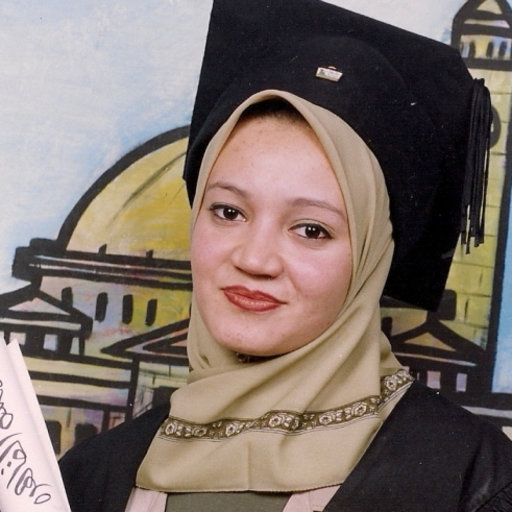
Dr Seham K. Abdel-Aal
Cairo University, Egypt — First plenary speaker
This afternoon’s first plenary speaker is from Cairo University, Egypt. She will be speaking on Fascinating structure and physical properties of lead-free hybrid perovskites for multifunctional applications. Dr Abdel-Aal is a lecturer at the Physics Department of the Faculty of Science at Cairo University and a Senior Researcher (Principal Investigator) at the Egypt Nanotechnology Center. She obtained her PhD from Cairo University on the synthesis, structure and properties of lead-free organic-inorganic hybrid perovskites.
Her postdoctoral work, on the synthesis and characterization of graphene nanocomposites, was carried out at the Center of Nanotechnology at the Zakir Hussain College of Engineering and Applied Science, Aligarh Muslim University, India. She is the Principal Investigator of jointly funded bilateral research projects with the Joint Institute of Nuclear Research (JINR), Dubna, Russia; the Wigner Research Center of Physics, Hungarian Academy of Science, Budapest, Hungary; Huazhong University of Science and Technology, China; and the Central Laboratory of Solar Energy and New Energy Sources, Bulgarian Academy of Science, Bulgaria.
Recently, she received 200,000 EGP (€10,000) from the Science and Technology Development Fund of the Egyptian Ministry of Higher Education for the green synthesis of graphene nanocomposites for energy applications. Dr Abdel-Aal is a Steering Committee member of both the African Light Source and the African Crystallographic Association.
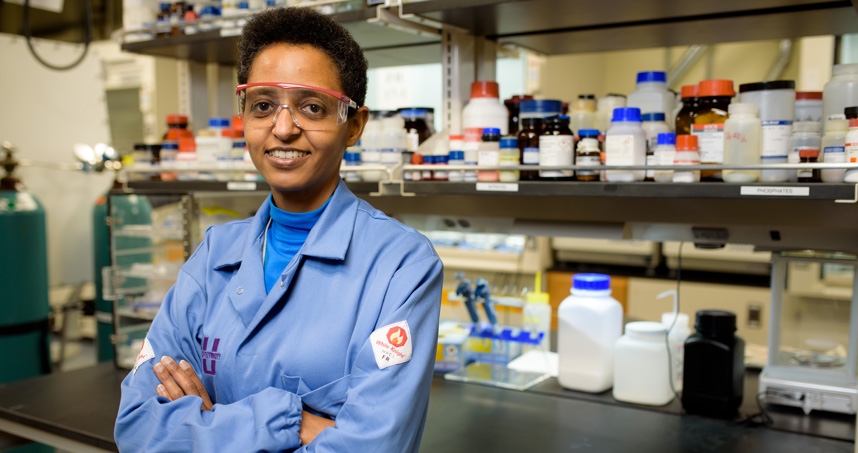
Professor Sossina Haile
Department of Materials Science and Engineering, Northwestern University — Second plenary speaker
Professor Haile’s research centers on ionic conduction in solids. Her objectives are to understand the mechanisms that govern ion transport and to apply that understanding to the development of advanced solid electrolytes and novel solid-state electrochemical devices. Applications of fast ion conductors include batteries, sensors, ion pumps, and fuel cells.
Her group is investigating proton-conducting solid acid compounds, proton-conducting perovskites, mixed oxygen- and electron-conducting perovskites, oxygen-conducting oxides, and alkali-conducting silicates.
The group’s standard technique for the characterization of electrical properties is A.C. impedance spectroscopy. Ionic conductivity is closely tied to the crystal structure of, and structural transitions in, the conducting solid. Crystal growth, structure determination by X-ray and neutron diffraction, and thermal analysis are also important aspects of her research.
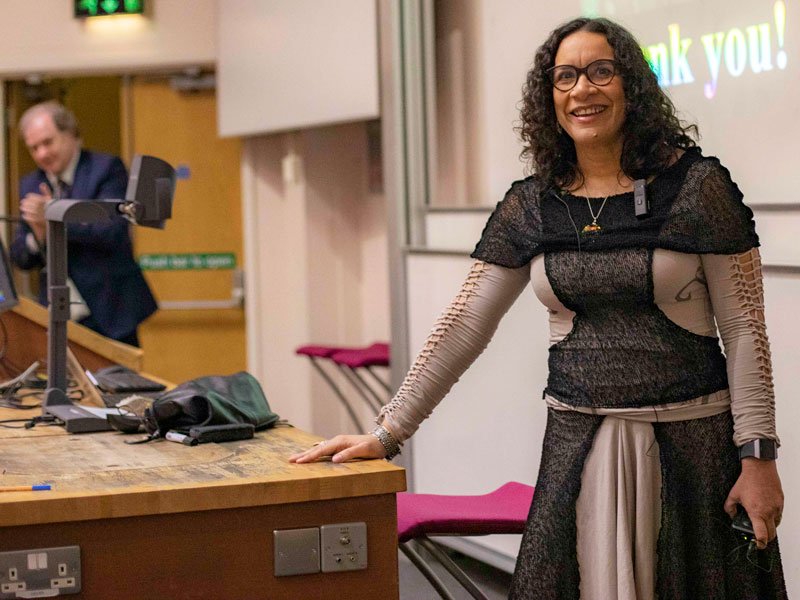
Professor Carla Figueira de Morisson Faria
University College London — Featured speaker
Also of note today is the talk by Professor Carla Figueira de Morisson Faria of University College London. Dr Faria is a specialist in theoretical strong-field laser-matter interaction. Since the mid-1990s she has been developing theoretical models for several phenomena in this context, using both analytical and numerical methods.
Apart from its fundamental value as an area of science, strong-field laser physics has a wide range of applications, such as particle physics, plasma physics (in particular laser fusion), solid-state physics, novel X-ray sources, and attosecond science. In particular, attosecond science is an emerging, interdisciplinary field of research, in which the fact that most strong-field phenomena take place in the attosecond (10−18 s) time range plays a very important role.
Dr Faria has over 70 publications in this research area in peer-reviewed journals and conference proceedings, and has participated in many conferences in optical physics, in several of these as an invited speaker.
Catch the historic session
The inaugural session of the African Crystallographic Association takes place today at 11h45 (GMT+2).